How to Figure out Right Technology Stack for Web App Development?


Before you commence with the process of writing code or getting code written, you need to probably select a suitable web app stack. We do agree, that it is no easy task at all for business owners, who are a novice to technical aspects.
With a multitude of options in the best technology stack for web applications offered in the market, it can be confusing as to which language or framework would best suit your web app.
In this blog, we will guide you about everything from defining web stack, selecting the best stack, to things you should avoid while selecting tech stack. Read on to know more.
What is Technology Stack?
It is a set of technologies, which form an indispensable part of a web or mobile application. It has the capability of creating a great impact on the timeline and speed of the development process. Apart from this, it can also greatly influence the scalability part of the future.
LAMP (Linux, Apache, MySQL, and PHP) stack is one best example of technology stack. Sometimes, a tech stack is also referred to as a solution stack.
Additionally, it also comprises of a combination of software applications, programming languages, and frameworks, libraries, servers, etc. mainly used by developers.
Usually, layers of the application are built atop one below, which results in the creation of stack. It is basically divided into 2 parts, which is client-side (referred to as front-end) and server-side (referred to as back-end). It is very important to carefully select technology stacks, as they play a pivotal role in determining the success or failure part of your product.
Different Elements of Web Application
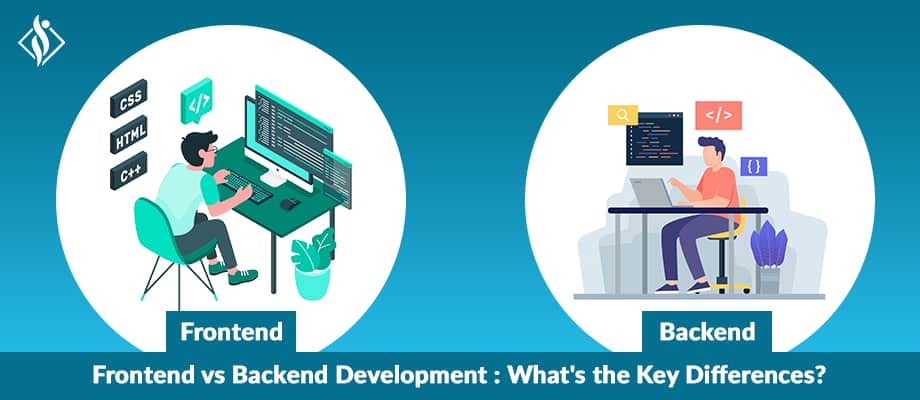
Web application structure is usually made of 2 main components – Front-end & Back-end. Both have a crucial role in the web development process. Let us have a brief discussion on these components in brief:
Front-end element
To define, it can be said that the front-end is usually what your client sees at the time of interacting with your application.
Popularly referred as “client-side” of the application, it comprises of almost everything which a user might experience directly from graphs, tables, buttons, text colours, styles, navigation menu, etc.
Front-end developers take care of everything from design, structure, behavior, and content of what is presented in the browser screen of web applications, websites, and mobile applications, whenever a user opens it.
Languages
Languages used for front-end development are
- CSS
- HTML
- JavaScript
Frameworks & Libraries
- AngularJS,
- React.js,
- JQuery,
- SASS,
- Express.js,
- Ember.js,
- Semantic-UI,
- Foundation,
- Backbone.js,
- Materialize, etc.
Related Read: Top Front-end Web Development Tools & Frameworks for 2023
Back-end element
To define, it can be said that the back-end is all about things running in the background, which is not visible to users.
Popularly referred as “server-side” of the application, it basically serves the purpose of storing and organizing data and also making sure that all the functionalities on the client’s side are working smoothly. The back-end part is not visible and non-interactive in nature.
Backend designers develop parts and characteristics, which can be easily indirectly accessed by users by making use of front-end applications.
Back-end involves several activities such as libraries creation, writing APIs, and working with system components without user interfaces and also systems of scientific programming.
Language
Languages used for back-end development are
Frameworks
- Express,
- Django,
- Rails,
- Spring,
- Laravel, etc.
Other scripting languages are
- C#,
- Ruby,
- REST,
- GO, etc.
When components of both frontend and backend are combined together, then it is termed as a technology stack.
Criteria to choose best Technology Stack for Web App Development
- Project size & Complexity of Application
- Maintainability
- Security
- Scalability
- Bug Testing
- App Development Cost
- Development Time
- License
- Time to Market
- Developer Community & Documentation
Project Size & Complexity of Application
It is very important to determine how many components would be involved in developing a web application. The size and complexity of application matter the most at the time of selecting the ideal technology stack.
For example: if your web application grows, then it can increase complexity as well.
Small Size Apps
This type of app is usually small in size and will hardly comprise of 1 to 4 web pages, small web solutions, online magazines, and portfolios. Small size apps can be easily designed by making use of the Readymag tool or Webflow.
Medium Size Apps
This type of app is usually required by digital stores, financial and enterprise applications.
They require a complex type of technology stack which comprises of a combination of languages and several layers as the application calls for more specific features and is built by making use of suitable frameworks.
It is also important to take into consideration cross-platform integrations as medium-sized projects usually involve several systems.
Large Size Apps
Social platforms and online marketplaces usually fall under the category of large-sized projects or apps. This type of project usually requires speed, scalability, and serviceability.
Additionally, this type of project often requires a composite combination of languages, technologies, instruments, and languages for the purpose of developing an application’s individual sections. Therefore, you should also take into consideration both function as well as non-functional needs.
Related Post: .NET Core vs Node.js for Enterprise Web Development – Technology Stacks Comparison
Maintainability
This holds of great significance when it comes to app web development.
There are 2 main factors that decide the maintainability of your web application: Codebase & Architecture.
- Codebase – It should not be too concise or lengthy. The lengthy code would simply require more time for processing. On the other hand, a concise type of codebase would simply be helpful in debugging errors. Therefore, it is suggested to select a programming language, which is neither too long, is reusable and easy to maintain.
- Architecture – It is very important that your web applications support scalability, reusability, and not to mention portability too. It can be said that whichever tech stack you choose, should allow you to incorporate extra tools and frameworks when it comes to app development.
Security
You need to make sure that your web application is secure and is kept protected from cyber attacks. For this reason, it is stated to make sure that the technology stack which you select, lets you create a secure app.
Different types of web app development technologies have their individual purposes and security guidelines, where all necessary steps for minimizing vulnerability and prevention of unknown threats are given in detail.
Therefore, you should make sure that your web app is created in line with the right security guidelines.
Scalability
The main reason behind creating a web application is to make sure that it has scope to grow and can handle load in the best way.
Scalability can be in the form of either vertical or horizontal.
- Vertical scalability helps in adding fresh features and functions based on the user’s demand.
- Whereas horizontal scalability is all about describing your web app’s ability to handle user growth in the best way.
Bug Testing
Broken code or untested code is usually the biggest bug when it comes to production. Therefore, for this reason, it is said to include technologies where you can easily carry out the testing procedure.
Apart from this, it also makes sense to consider technologies that offer test-driven development. This type of technology really proves to be a boon especially in times when you have a prototype of your web application having correct components structure and clearly defined interactions.
Before the process of production code commences, it allows developers to write test codes, which ensures error less data flow in the new app.
App Development Cost
We do understand that converting your real-life web application is not that easy and is not free of cost at all. It does require a lot of time, effort, and investment too.
The app development cost is basically dependent on the type of technology stack selected by you. At the time of estimating costs, you should take into consideration the developer’s salaries and app maintenance costs as well.
Development Time
If you wish that your project should be completed in the shortest possible time, then it is suggested to rely on ready-made framework or solutions, which further enables easy integration.
MEAN Stack, which is usually a combination of technologies is one of the best suitable stacks, as it plays a vital role in cutting down development time by using third-party integrations. Therefore, this process ultimately results in speeding up the entire procedure.
License
It is suggested that if possible you should go for open-source solutions only. The best thing about these solutions is that it is free of cost and can be used by making unlimited changes, whenever required depending on your project requirements.
Opting for this type of technology helps you in reducing initial development and maintenance costs as well.
Time to Market
TTM holds great significance when it comes to selecting tech stack for small-sized businesses or startups. If you develop and release your applications in a faster way, then you can stay ahead of your competitors for sure.
At the time of choosing a technology stack for a web application, you need to take into consideration issues such as out-of-the-box solutions, integration with third-party solutions, easy to test technology, and availability of documentation & developers.
Developer Community & Documentation
It might happen that at the time of dealing with obscure technologies, a developer may find it a bit tricky to find the best solution for a specific type of problem.
Therefore, it is suggested to look for technologies, which comprises of good documentation and developer community as well. When these two things combine, then it simply increases the chances of finding the best solution in the shortest possible time.
Things to Avoid While Picking Web App Stack
Here, are a few things which start-ups and businesses should avoid at the time of selecting a web app technology stack. Read further to know about it.
1. Don’t Rely on Competitor’s Stack Selection
Although it is a good strategy to keep an eye on what competitors are doing, it is strictly a big NO when it comes to picking technology stack based on their experience.
The selection of a tech stack should be done purely on your project requirements and goals. Like every project, your project is unique too and you need to stay ahead of your competitors.
The reason behind this is that it might happen that at some point in time, you might require to upgrade your tech stack to suit your growing business. Then it will prove to be an expensive affair at that point in time.
So, therefore for this reason it is suggested to pick tech stack keeping in mind future technology for business.
2. Avoid Personal Preferences
If you wish, you can select a technology stack for your web application based on your personal preferences. But wait, there is a drawback to it. This approach is only best to implement for people, who have a strong background in the web development domain.
For instance: if you have years of experience and expertise in the web app development area, then probably your preferences can be relied on.
On the contrary, if you don’t have any detailed knowledge regarding the whole process of web development, then your personal preferences strategy can be a total failure, as you would be opting for wrong components for your tech stack.
3. Don’t Consider Things Based on Previous Projects
As mentioned earlier, every project is unique in its own way. Here, you should not simply rely on the technology stack used by you for your previous project, no matter even though the project was a successful one. It just irrelevant or not suitable for your current project.
Therefore, it is very important to make a detailed online research and see which type of tech stack would work in the current scenario for your project.
4. Don’t Consider Things Based on Online Research
It is suggested not to rely purely on online research as it can sometimes cost you more when compared to what you have determined to pay for. This can sometimes even lead to high chances of making an incorrect choice.
Selecting a technology stack for your project is an important decision to be taken, then it is best to steer clear on online advice or suggestions.
5. Trends
It is very important that you should keep a watch on technology trends and follow them too. This will give you a fair idea about what type of revolutionary changes have been made in the web development procedure.
Even though in the first place, modern technologies can be enticing, but before you decide to adopt or implement them you should, therefore, carry out detailed research online.
After doing this, you should then probably take a wise decision on tech stack, which suits your business needs in a remarkable way.
Takeaway
It can be said that selecting a technology stack is an important aspect of building a web application.
Therefore, you should make it a point to exercise great care and take into consideration important things to make sure that you select the best technology stack for your web application development.
FAQs
For what purpose is the app stack used for?
The main function of the app stack is to deliver great success for the entire design, development, and maintenance procedure of your web application.
Which factors of tech stack affect long-term maintainability?
The technology stack affects long-term maintainability by three main factors: The structure, length of code, and duplicate code.
Name a tech stack of YouTube, Instagram, and Uber.
YouTube: Python, ApacheHTTP, MySQL, Linux, HTML5, Amazon EC2, Pysco
Instagram: JavaScript, React, PostgreSQL, Nginx, Django, GraphQL, Redux.js
Uber: Java, React, Node.js, Nginx, MongoDB, Python, Backbone.js
Which are popular web stacks used for front-end and back-end development?
Popular web stacks used for both front-end and back-end web development are LAMP and Python-Django tech stack.
With over 10 years of experience in Tech industry at Samarpan Infotech with architect system, problem solving and creativity. "Today is the only day. Yesterday is gone".