How AI Integration Can Help Healthcare Businesses Scale Operations
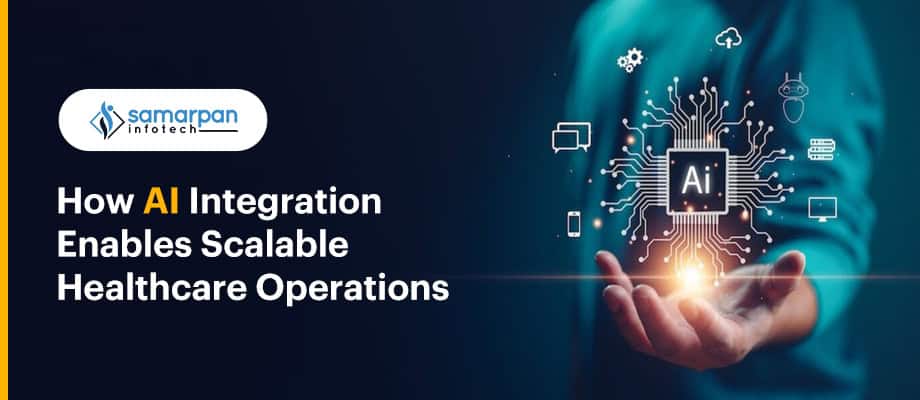

As healthcare systems worldwide grapple with rising demand, aging populations, and clinician burnout, simply adding more staff or infrastructure isn’t enough. The real challenge today is scaling smart, without sacrificing quality, safety, or efficiency.
That’s where AI comes in. From automating admin tasks to supporting clinical decisions, AI is helping hospitals and clinics work faster, think smarter, and care better, at scale.
8 Key Areas for AI Automation in Healthcare
1. Patient Intake & Workflow Automation
Manual registration, handwritten forms, and back-and-forth insurance checks still dominate front desk workflows. This slows down onboarding, adds stress to admin staff, and can lead to data entry errors that affect billing.
AI-powered intake systems automate data capture from IDs, insurance cards, and forms using OCR (Optical Character Recognition) and RPA. Patient details flow directly into EHRs and billing platforms, accurately and instantly. With smart routing rules, patients are prioritized based on urgency or coverage, helping reduce wait times and front-desk workload.
How AI Automation Can Be Implemented
- OCR to read IDs, forms, and insurance cards: Integrate OCR to instantly extract accurate data from handwritten forms, government IDs, and insurance cards, eliminating the need for manual data entry.
- RPA to autofill EHR and billing fields: Robotic Process Automation mimics user actions to automatically input patient information into EHRs, billing systems, and other connected platforms with minimal human effort.
- Priority routing using business rules: Integrate AI predefined routing logic to prioritize patients based on visit type, urgency, or insurance verification status, ensuring the right cases are fast-tracked through the system.
- Predictive triage to redirect urgent cases: By analyzing symptoms or patient history in real time, AI can flag high-risk cases and push them forward in the care queue for faster clinical attention.
- Exception handling via human-in-the-loop: When data is missing, unclear, or outside expected patterns, the AI system flags it for review, allowing staff to intervene only when needed.
4 Benefits of AI Automation
- 60% faster onboarding
- Reduced front-desk errors
- Higher staff efficiency
- Better first impressions for patients
2. Clinical Decision Support (CDSS)
Clinics deal with massive volumes of data like lab results, imaging, vitals, and patient histories, all under time pressure. Sifting through this information manually slows down decisions and increases the risk of diagnostic errors or treatment delays.
AI-powered Clinical Decision Support Systems (CDSS) analyze real-time clinical data and flag anomalies, recommend diagnoses, or suggest treatment plans. These systems integrate directly with EHRs to surface timely insights during consultations.
How AI Automation Can Be Implemented
- ML models for pattern recognition: Trained on historical outcomes, AI can detect early signs of deterioration or hidden disease risks.
- EHR-integrated decision models: AI insights are embedded within the EHR interface, so clinicians receive alerts in real time without switching tools.
- Condition-specific rule engines: Algorithms customized to specialties (cardiology, oncology, etc.) ensure context-specific recommendations.
- Transparent alerts with rationale: All alerts include clear explanations and evidence of references, helping clinicians validate AI suggestions.
- Override and feedback loop: Clinicians can override recommendations, and their inputs help retrain and fine-tune future predictions.
4 Benefits of AI Automation
- Faster clinical decisions at the point of care
- Lower diagnostic error rates
- Increased confidence in complex cases
- More consistent care across providers
3. Virtual Assistants & AI Triage
Managing billing and insurance claims is one of the most complex and error-prone parts of healthcare operations. Staff must navigate constantly changing payer rules, enter codes correctly, and handle denials, all while maintaining tight turnaround times.
AI transforms RCM by automating charge capture, checking medical codes, and denial prediction. With NLP & machine learning, AI can extract billable items from clinical notes, flag errors before claims are submitted, and even suggest appeals for denied claims.
How AI Automation Can Be Implemented
- NLP to extract billables from notes: AI reads clinical documentation to identify procedures, diagnoses, and services that need to be coded.
- Auto-coding and validation: AI suggests the most accurate ICD/CPT codes and checks for compliance against payer-specific requirements.
- Denial prediction using ML models: Based on historical claims data, AI flags submissions that are likely to be denied before they’re sent.
- Dynamic payer rules integration: AI monitors and adapts to changes in payer policies and automatically updates claim logic.
- Automated appeals workflow: For denied claims, AI generates templated appeals and tracks follow-up actions until resolution.
3 Benefits of AI Automation
- Fewer claim denials and manual corrections
- Increased billing accuracy and compliance
- Improved cash flow and financial predictability
4. Patient Engagement & Retention
Keeping patients engaged throughout their care journey is harder than ever, especially with growing caseloads, limited staff, and fragmented communication channels. Missed appointments, lack of follow-ups, and inconsistent outreach not only affect outcomes but also reduce patient loyalty and revenue potential.
AI helps healthcare providers stay connected with patients at scale, through personalized reminders, virtual assistants, and intelligent follow-up systems. Platforms like Babylon Health used AI-driven chatbots to triage symptoms, answer health queries, and help patients book appointments instantly, reducing the load on call centers and front desks.
How AI Automation Can Be Implemented
- Conversational AI assistants: AI-powered chatbots or voice agents handle common questions, symptom checks, and scheduling around the clock.
- Personalized outreach using ML: AI learns patient behavior and preferences to send timely reminders, wellness tips, or care plan nudges.
- Automated follow-up systems: Patients receive check-in messages after visits, tests, or procedures without staff intervention.
- Natural language support for accessibility: NLP tools translate messages into multiple languages or simplify complex instructions.
4 Benefits of AI Automation
- Reduced no-shows and appointment gaps
- Higher patient satisfaction and trust
- Scalable, 24/7 engagement without more staff
- Better adherence to care plans and check-ups
5. Predictive Staffing & Capacity Planning
Fluctuating patient volumes, staff shortages, and unexpected surges make it difficult to plan shifts and allocate resources efficiently. Overstaffing increases costs, while understaffing leads to long wait times, staff burnout, and compromised care quality.
AI integration can bring predictability to workforce planning by analyzing historical patterns, seasonal trends, and real-time admissions. Hospitals like Cleveland Clinic use AI models to forecast staffing needs and ICU demand, ensuring the right teams are available at the right time, without overloading or overspending.
How AI Automation Can Be Implemented
- Time-series forecasting models: AI uses past patient volume data to predict future demand by hour, day, or season.
- Real-time capacity tracking: Integrates with ADT (Admission-Discharge-Transfer) feeds to monitor in-hospital movement and anticipate staffing needs.
- Dynamic scheduling tools: AI recommends optimal shift patterns based on projected workloads, skill sets, and staff availability.
- What-if scenario simulation: Simulates staffing needs under flu outbreaks, long weekends, or emergency spikes to build flexible plans.
- Integration with HR platforms: Connects AI forecasts with workforce management systems to streamline staff assignments and alerts.
4 Benefits of AI Automation
- Balanced staff-to-patient ratios with less guesswork
- Reduced overtime and agency staffing costs
- Improved employee satisfaction and lower burnout
- Higher quality and continuity of patient care
6. Clinical Documentation Automation
Documentation is a top source of burnout for clinicians, taking up hours each day and often cutting into time that could be spent with patients. Manual note-taking is slow, repetitive, and susceptible to errors that can affect billing, compliance, and continuity of care.
AI tools streamline documentation using voice recognition and natural language processing (NLP). Solutions like Nuance Dragon Medical allow doctors to dictate notes in real-time, while AI automatically generates structured summaries, flags missing elements, and even suggests codes, speeding up chart closure and reducing cognitive load.
How AI Automation Can Be Implemented
- Speech-to-text engines: AI transcribes spoken notes during or after a patient visit and organizes them into EHR-ready formats.
- NLP for structured summaries: Extracts key clinical data points, diagnosis, medications, and plans of care from free text and formats them correctly.
- Smart templates with autofill: Uses past encounters and visit types to pre-fill relevant sections in the chart.
- ICD/CPT code suggestion: AI recommends the most appropriate billing codes based on clinical content and past behavior.
- Alert for missing elements: Flags incomplete documentation or inconsistencies to improve compliance and billing integrity.
4 Benefits of AI Automation
- Up to 50% faster chart completion
- Improved documentation accuracy and consistency
- Reduced clinician fatigue and burnout
- Higher coding compliance and revenue capture
7. Supply Chain & Inventory Management
Managing medical inventory is a constant balancing act, order too much, and you waste resources, order too little, and you risk critical shortages. Manual tracking and static reorder rules often fail to respond to real-time needs, especially during emergencies or demand spikes.
AI-driven inventory systems solve this by analyzing usage trends, forecasting demand, and automating reorder points. During the COVID-19 crisis, systems like those used by Stanford Health helped predict PPE consumption and maintain supplies without overstocking, proving that AI can bring resilience to even the most fragile supply chains.
How AI Automation Can Be Implemented
- Demand forecasting models: Machine learning predicts inventory needs based on historical usage, upcoming appointments, and seasonal patterns.
- Automated reorder triggers: AI sets dynamic par levels and initiates sourcing actions when stock approaches optimal thresholds.
- Usage anomaly detection: Flags unusual consumption patterns, whether due to fraud, misplacement, or changing clinical needs.
- Vendor lead-time optimization: Adjusts orders based on current supplier performance and delivery timelines.
- Integration with procurement platforms: Syncs forecasts and purchase orders with existing ERP or inventory systems for real-time updates.
4 Benefits of AI Automation
- 15–30% reduction in inventory waste and holding costs
- Improved supply availability for high-priority procedures
- Fewer stockouts of essential items like meds or PPE
- More agile and cost-effective procurement workflows
8. Population Health & Risk Stratification
Identifying which patients are most at risk, whether for hospital readmission, chronic disease progression, or gaps in preventive care, is essential to proactive healthcare, yet nearly impossible to manage manually at scale. Traditional approaches often rely on outdated reports, limited data inputs, or generic risk models.
AI enables data-driven population health by analyzing EMR, claims, and social determinants to stratify patient risk across large populations. Health systems like Kaiser Permanente use predictive models to identify at-risk cohorts, personalize outreach, and intervene earlier, improving quality scores and reducing avoidable costs.
How AI Automation Can Be Implemented
- Unified data aggregation: Combines EMR, lab, demographic, and social data into one analytics-ready platform.
- Risk scoring algorithms: AI models predict likelihood of readmission, ER visits, or chronic disease escalation.
- Care gap detection: Identifies missed screenings, vaccinations, or follow-up appointments automatically.
- Automated outreach triggers: Flags high-risk patients for targeted engagement by case managers or virtual assistants.
- Program impact analysis: Continuously monitors health outcomes and adjusts population programs based on real-time data.
4 Benefits of AI Automation
- Enables earlier, more targeted interventions
- Improves quality metrics like HEDIS (Healthcare Effectiveness Data and Information Set) and STAR ratings
- Reduces preventable readmissions and ED visits
- Strengthens preventive care and chronic care management
7 AI Implementation Challenges in Healthcare
- Data is scattered and messy: Patient data lives in different systems and formats, making it hard for AI to access and understand everything it needs.
- Strict privacy rules: AI must follow laws like HIPAA and GDPR, which makes handling patient data safely a big responsibility.
- AI can be biased: If AI is trained on limited or one-sided data, it may give unfair or inaccurate results for some patients.
- Doesn’t fit into daily workflow: If AI tools don’t work smoothly with systems like EHRs, staff may find them frustrating or ignore them altogether.
- High setup costs: Building and running AI tools can be expensive, especially for smaller hospitals without big tech budgets.
- Staff may not trust it: Doctors and nurses might worry AI will replace them or feel unsure about trusting its decisions.
- Not tested in the real world: Some AI tools look great in labs but don’t work well with real patients or real hospital environments.
AI Implementation Roadmap for Healthcare
1. Identify High-Impact Use Cases
Start with problems that are frequent, repetitive, and measurable, like appointment scheduling, billing, or documentation. Choose areas where automation can clearly save time, reduce errors, or improve care delivery.
2. Prepare & Clean the Data
Audit your existing data sources (EHRs, lab systems, billing records) to ensure they’re accessible, consistent, and compliant. Clean, structured data is the foundation for accurate and useful AI.
3. Choose the Right AI Tool or Partner
Use proven, healthcare-compliant AI platforms or vendors that offer plug-and-play solutions for your use case. Look for integrations with your EHR system and track record in clinical environments.
4. Run a Pilot with Real Clinician Involvement
Start with a small test, one department, one workflow, or one clinic, and involve doctors, nurses, and admin staff from day one. Measure KPIs like time saved, error rates, and satisfaction before scaling further.
5. Ensure Compliance, Transparency & Human Oversight
Make sure your AI tools follow privacy rules (HIPAA/GDPR), are explainable to clinicians, and allow human override. Build trust by showing staff how and why the AI makes its decisions.
6. Train, Support, and Scale Gradually
Offer hands-on training, FAQs, and support for staff adoption. Once the pilot succeeds, expand to other departments, gradually integrating AI across your operations.
Conclusion
AI integration isn’t about replacing healthcare professionals, it’s about empowering them to deliver faster, safer, and more efficient care without added strain. Whether it’s streamlining patient intake, predicting resource needs, or supporting clinical decisions, AI is reshaping what’s possible in modern healthcare operations.
As demand continues to rise globally, the ability to scale smartly, not just expand, will define the next generation of healthcare leaders. At Samarpan Infotech, we help healthcare providers with AI integration consulting while maintaining precision, empathy, and compliance, turning complex challenges into scalable, future-ready solutions.
With over 10 years of experience in Tech industry at Samarpan Infotech with architect system, problem solving and creativity. "Today is the only day. Yesterday is gone".