Full Stack Development: Discover Frontend, Backend, and Key Skills

In today’s digital world, the need for web applications is increasing. Businesses, large and small, are competing to provide the best digital experience to their customers. Enter the world of full stack development, a comprehensive approach to web development that guarantees both the front-end (what people see) and the back-end (the behind-the-scenes magic) perform in combination.
What is Full-Stack?
The term “full-stack” refers to a developer’s entire skill set, which includes both front-end and back-end programming. In the world of web development, a full-stack developer is like a Swiss Army knife, armed with the tools and knowledge to handle both the user interface and the server-side processes.
What is Full Stack Development?
Full stack development is the process of creating a web application’s front-end (client side) as well as its back-end (server side). It is about making sure that the user interface is intuitive and responsive, while back-end activities, such as data retrieval and storage, are efficient and safe.
What is a Full Stack Developer?
A full stack developer is a flexible individual who is knowledgeable about both front-end and back-end technologies. They are fluent in front-end languages such as HTML, CSS, and JavaScript, as well as back-end languages such as Python, Ruby, and PHP. They act as a link between the visual elements and the server-side architecture, allowing the web application to come to life.
Technologies used in Full Stack Development
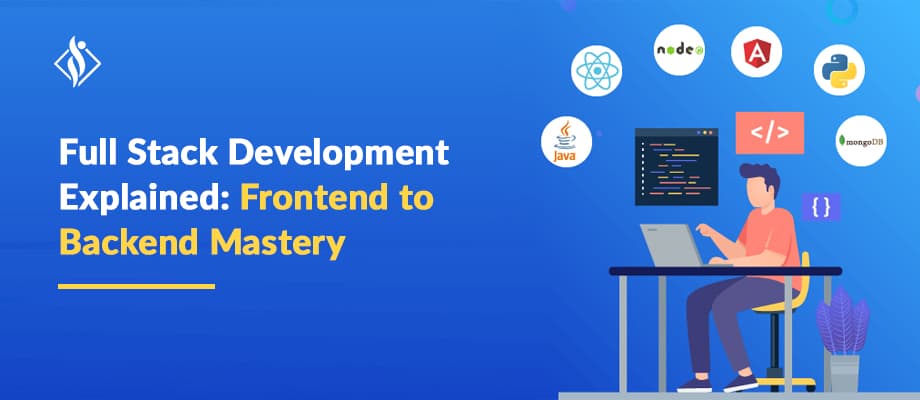
Full stack development is an as big universe with an extensive range of technologies at its service. Front-end technologies that are popular include Angular, React, and Vue.js. Node.js, Django, and Ruby on Rails are popular backend frameworks. Data is stored in databases such as MongoDB, PostgreSQL, and MySQL, and version control is handled by technologies such as Git.
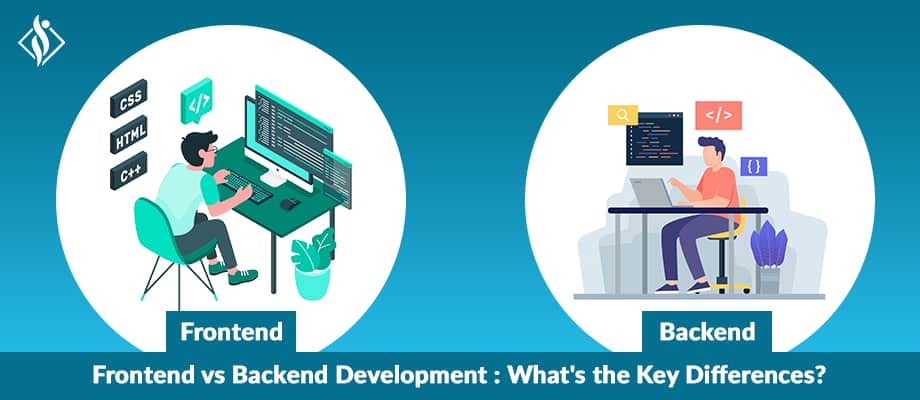
What is Frontend Development?
Frontend development, often termed as client-side development, focuses on creating the visual elements of a web application. It’s about ensuring that the user interface is user-friendly, responsive, and visually appealing. Technologies like HTML, CSS, and JavaScript play a pivotal role here.
What is Backend Development?
Backend development, or server-side development, is the backbone of a web application. It deals with the server, the application, and the database. It ensures that data is stored, retrieved, and manipulated efficiently. Languages like Python, Java, and PHP are the stalwarts of backend development.
What skills are required for a Full-Stack Developer?
A full-stack developer is a flexible web development expert that understands both the visual design and technical parts of a website. Here’s an overview of their key skills:
1. Front-end Proficiency
- HTML/CSS: The building blocks of web development. HTML structures the content, while CSS styles it.
- JavaScript: Vital for creating interactive websites. Familiarity with frameworks like React, Angular, or Vue.js is a plus.
- Responsive Design: Knowledge of frameworks like Bootstrap or Foundation to ensure websites look good on all devices.
2. Back-end Expertise
- Server Management: Understanding server-side scripting and how servers work is crucial. This includes handling APIs, creating server-side functions, and more.
- Database Management: Proficiency in databases like MySQL, PostgreSQL, or MongoDB to store, retrieve, and manipulate data.
- Languages: Mastery over back-end languages like Python, Ruby, PHP, or Node.js.
3. Version Control/Git
- Ability to track and manage changes using tools like Git, ensuring smooth collaboration with other developers.
4. HTTP & REST
- Understanding the protocols on which the web operates, and how to communicate between client and server using RESTful practices.
5. Web Architecture
- Ability to structure code, separate files, and organize data seamlessly.
6. Soft Skills
- Problem-solving: The ability to troubleshoot issues and find solutions efficiently.
- Attention to Detail: Ensuring no element is overlooked, from design to functionality.
- Communication: Being able to articulate ideas and collaborate with other team members.
What does a Full Stack Developer do?
A full-stack developer is a master in managing both the front-end and back-end components of a web application. Their roles are multiple and different:
Design & Development
- Crafting visually appealing user interfaces that offer a seamless user experience.
- Implementing responsive designs to ensure the application is accessible across devices.
Server Management
- Setting up and managing servers, ensuring they run smoothly.
- Handling server-side logic and creating efficient algorithms.
Database Operations
- Designing robust database schemas.
- Storing, retrieving, and manipulating data efficiently.
API Integration
- Integrating third-party services and APIs to enhance the application’s functionality.
Testing & Debugging
- Writing test cases and performing thorough testing to ensure the application is bug-free.
- Debugging issues and implementing fixes.
Optimization
- Ensuring the application loads quickly and runs efficiently.
- Implementing best practices for performance optimization.
Collaboration
- Working closely with designers, front-end developers, and other team members.
- Participating in code reviews and providing constructive feedback.
Continuous Learning
- Staying updated with the latest technologies trends.
- Continuously enhancing skills and adopting new tools and practices.
10 Benefits of Full-Stack Development
“Full-stack” is more than just a buzzword in web development. It is a comprehensive approach to developing web applications, integrating both user-facing and backend activities. The attractiveness of full-stack development stems from its comprehensive benefits. Let’s look at the benefits of this integrated strategy.
1. Comprehensive Skill Set
Full-stack developers are the Swiss Army knives of the web development world. Their expertise spans across both front-end (user interface) and back-end (server, database, and application) development. This versatility means they can pivot between tasks, understanding and addressing the intricacies of each layer of development.
2. Cost-Efficiency
For businesses, hiring a full-stack developer can be more cost-effective than recruiting multiple specialists for different roles. One developer with a comprehensive skill set can often achieve what might otherwise require a team, leading to reduced payroll and training costs.
3. Communication
With fewer people involved in a project, communication becomes more straightforward. A full-stack developer can single-handedly manage various aspects of the project, reducing the chances of miscommunication or information getting lost in translation between teams.
4. Faster Problem Resolution
Given their broad knowledge base, full-stack developers can quickly identify issues, whether they’re in the front-end or back-end. This ability to diagnose and rectify problems across the entire application spectrum leads to faster resolutions and less downtime.
5. Consistency and Uniformity
When one individual or a compact team handles the entire development process, there’s a consistent vision and execution from start to finish. This consistency can lead to a more cohesive user experience and a uniform codebase, making future updates or changes more manageable.
6. Adaptability and Future-Proofing
Full-stack developers are often at the forefront of technological advancements, given the breadth of their role. Their adaptability means they can quickly integrate new technologies or methodologies into projects, ensuring the end product is always cutting-edge.
7. End-to-End Management
From conceptualization to deployment, full-stack developers can oversee the entire lifecycle of a project. This end-to-end management ensures that every phase of the project aligns with the initial vision and objectives.
8. Holistic Perspective
Having a hand in every aspect of development gives full-stack developers a unique, holistic perspective. They understand how decisions in one area can impact another, leading to more informed choices that benefit the overall project.
9. Optimized Performance
With a deep understanding of multiple technologies and how they interplay, full-stack developers can optimize performance at every level, ensuring fast load times, responsive designs, and smooth user interactions.
10. Scalability
Full-stack developers can build applications with scalability in mind, ensuring that as a business grows or its needs evolve, the application can adapt without a complete overhaul.
Conclusion
The future of web development is full stack development. With the digital landscape continually changing, the necessity for people with a comprehensive understanding of web development is critical. Understanding the intricacies of full stack development is critical whether you’re a business wanting to build a strong online application or an aspiring developer. Dive deep, remain current, and leverage the power of full stack development.
With over 10 years of experience in Tech industry at Samarpan Infotech with architect system, problem solving and creativity. "Today is the only day. Yesterday is gone".