What Does It Really Cost to Run a Shopify Store Monthly?


You sign up for Shopify’s $39 plan. A few months in, you’re spending over $250 monthly, and you’re not even scaling yet. What happened? Launching a Shopify store is an exciting venture, but understanding the full scope of monthly expenses is crucial for sustainable growth. While Shopify’s base plans are transparent, additional costs can accumulate quickly, impacting your bottom line. This guide provides a detailed breakdown of all potential monthly expenses, helping you budget effectively and avoid surprises.
Shopify Plan Pricing: The Non-Negotiables
Shopify’s monthly plans provide a strong foundation, but your plan will determine your transaction fees, staff access, reports, and feature flexibility:
| Shopify Plan | Monthly Price | Key Features |
|---|---|---|
| Basic | $39 | Full website, 2 staff accounts, basic reports |
| Grow | $105 | 5 staff accounts, standard reports, lower transaction fees |
| Advanced | $399 | 15 staff accounts, advanced reports, custom pricing by market |
| Plus | $2000+ | Custom checkout, headless commerce, B2B features, dedicated support |
Pro Tip: Annual billing saves ~25%, but most new stores start monthly.
Even though these plans offer core tools like product listings, shipping setup, and discount codes, they don’t include key features like theme upgrades, marketing tools, or app-based functionalities that almost every store eventually adopts.
Additional Expenses: Beyond the Basics
1. Domain Name & SSL Certificate
You’ll need a custom domain to build credibility. Shopify domains typically cost $10-$20/year, but you can also buy one from registrars like Namecheap or GoDaddy.
- SSL certificate is included with all Shopify plans (a big security plus).
- Add-ons like domain privacy or email forwarding may add $10-50/year.
Domains help establish your brand identity and online presence. Choosing a memorable, short domain can improve click-through rates and customer trust.
2. Theme Costs: Free vs. Paid
Shopify themes define your store’s design, layout, user experience, and mobile responsiveness.
- Free themes: Great for lean startups, limited design flexibility.
- Paid themes: One-time cost of $150-$400. Many include advanced filtering, speed optimization, and mobile UX improvements.
Themes impact conversion rates, load speed, and how trustworthy your store feels to first-time buyers.
3. App Costs: The Most Variable Expense
Apps are plugins or integrations that enhance your store’s capabilities, such as adding product reviews, managing subscriptions, or recovering abandoned carts.
Most stores use 3 to 10 apps. Some are free; others charge monthly fees or usage-based pricing. Categories include:
- Product reviews
- Upsell/cross-sell tools
- Loyalty & referral systems
- SEO optimizers
- Shipping integrations
- Subscription management
Typical spend: $30 to $150+/month. According to Uptek, the average merchant spends $58.49/month on apps.
Watch out: Uninstalling an app doesn’t always remove injected code. Conduct regular theme audits to maintain site speed.
4. Shopify Transaction Fees & Payment Gateway Charges
Shopify charges a per-sale transaction fee if you’re not using their native payment processor (Shopify Payments). This is in addition to credit card processing fees.
- Shopify Payments: ~2.9% + 30¢ per transaction (Basic Plan)
- Third-party gateways: Add 0.5% to 2% on top of card fees
These small percentages add up, especially as your store scales. High-volume stores benefit from switching to Shopify Plus or negotiating lower fees.
5. Marketing & Advertising Spend
Marketing costs are often overlooked but essential to attracting traffic and driving sales. Expect to spend:
- Google/Facebook Ads: $100-500+/month depending on campaign size
- Email Marketing: Tools start free but typically range from $30-100/month
- Influencer/UGC Campaigns: Varies widely, but expect $100-500/month for beginner collaborations
A general rule is to allocate 10-30% of your revenue toward marketing, especially during growth phases.
Realistic Monthly Budget Scenarios
Every Shopify store is different, so is its budget. Your actual monthly cost depends on your business stage, sales volume, tech needs, and marketing efforts.
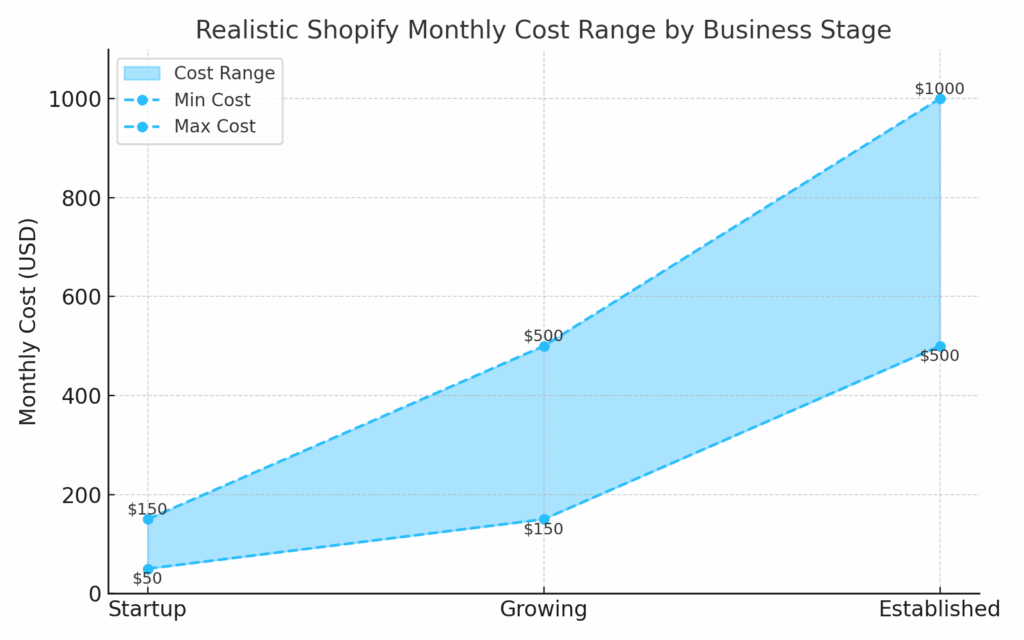
To help you forecast realistically, here are three common merchant profiles and what they typically spend. These scenarios give you a benchmark to evaluate your own expenses or plan your growth strategy accordingly.
| Business Stage | Estimated Monthly Cost | Description |
|---|---|---|
| Solo Beginner | $50-90 | Free theme, 2-3 apps, basic plan |
| Growing DTC Brand | $150-300 | Paid theme, 5-7 apps, email & ads |
| Scaling Shopify Plus | $500+ | Advanced tools, developer support, marketing |
How to Budget for Hidden Costs
Beyond the obvious expenses, several hidden costs can impact your monthly budget:
- App Overload: Installing multiple apps can lead to overlapping functionalities and increased costs. Regularly audit your apps to ensure each adds value.
- Returns & Chargebacks: Handling returns and chargebacks can incur additional fees. Implement clear return policies and monitor chargeback ratios.
- Third-Party Services: Integrations with external services like CRMs or accounting software may have their own subscription fees
- Payment Processing Fees: Each payment gateway deducts a transaction fee, and some charge more for international payments. Use Shopify Payments to reduce third-party gateway fees.
- Inventory Holding Costs Overstocking ties up cash and may lead to storage fees or unsellable goods. Use inventory forecasting tools and test smaller batches before going deep on any product.
Shopify Is Scalable – So Is the Cost
Shopify’s ability to scale with your business, from solo ventures to thriving brands, is unmatched. But as your store expands, off-the-shelf tools often fall short. You may face performance bottlenecks, feature limitations, or rising costs from piecemeal solutions.
This is where our custom Shopify development services become a game-changer. Tailored solutions help streamline your tech stack, improve site performance, and deliver user experiences that convert.
I'm currently a WordPress & Shopify developer at Samarpan Infotech, I'm passionate about web development. Beyond coding, I have a curious mind for world affairs and geopolitics, while also enjoying the occasional chess match in my spare time.